


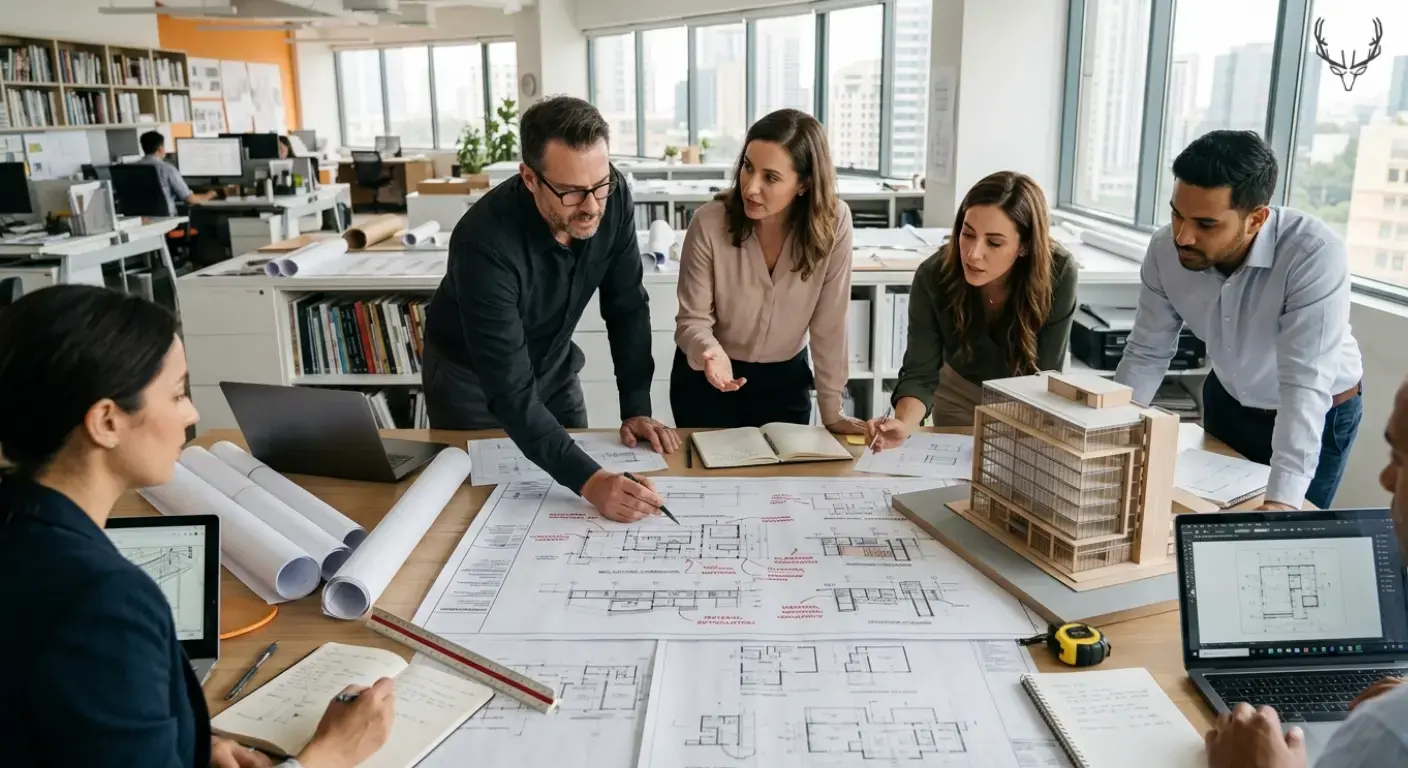
Pre-Construction Planning plays a critical role in shaping the success of any building project, including custom homes. Before materials are ordered or construction begins, early-stage decisions determine cost efficiency, design clarity, and long-term performance.
Addressing potential challenges during this phase reduces the risk of delays, budget overruns, and structural compromises later in the process.
This article explains what Pre-Construction Planning involves, why it is essential for avoiding costly design issues, and how key strategies can help identify and resolve problems before they escalate.
What Is Pre-Construction Planning
Pre-Construction Planning refers to the structured process of evaluating, designing, and organizing a project before physical construction begins. It involves aligning architectural intent, engineering feasibility, budget constraints, and site conditions into a cohesive plan.
Key components include:
- Site analysis and feasibility studies
- Preliminary design development
- Budget estimation and cost forecasting
- Material selection and sourcing strategies
- Coordination between architects, engineers, and contractors
This phase establishes a clear roadmap, ensuring that all stakeholders operate with shared expectations and defined objectives.
Why Early Planning Prevents Costly Design Challenges
Design issues often become expensive when discovered during or after construction. Pre-Construction Planning minimizes this risk by identifying conflicts early, when changes are easier and more cost-effective to implement.
This is especially important in home design, where early decisions influence both functionality and long-term value.
Reducing Design Revisions
Early evaluation allows teams to refine layouts, structural systems, and material choices before they are finalized. In home design, this reduces the need for mid-project modifications that can disrupt timelines and increase costs.
Improving Budget Accuracy
Detailed planning provides more reliable cost estimates. By accounting for materials, labor, and site-specific conditions, projects are less likely to encounter unexpected financial adjustments that can affect the overall home design process.
Enhancing Project Coordination
When all stakeholders are involved early, communication gaps are minimized. This ensures that design goals, engineering requirements, and construction methods are aligned from the outset.
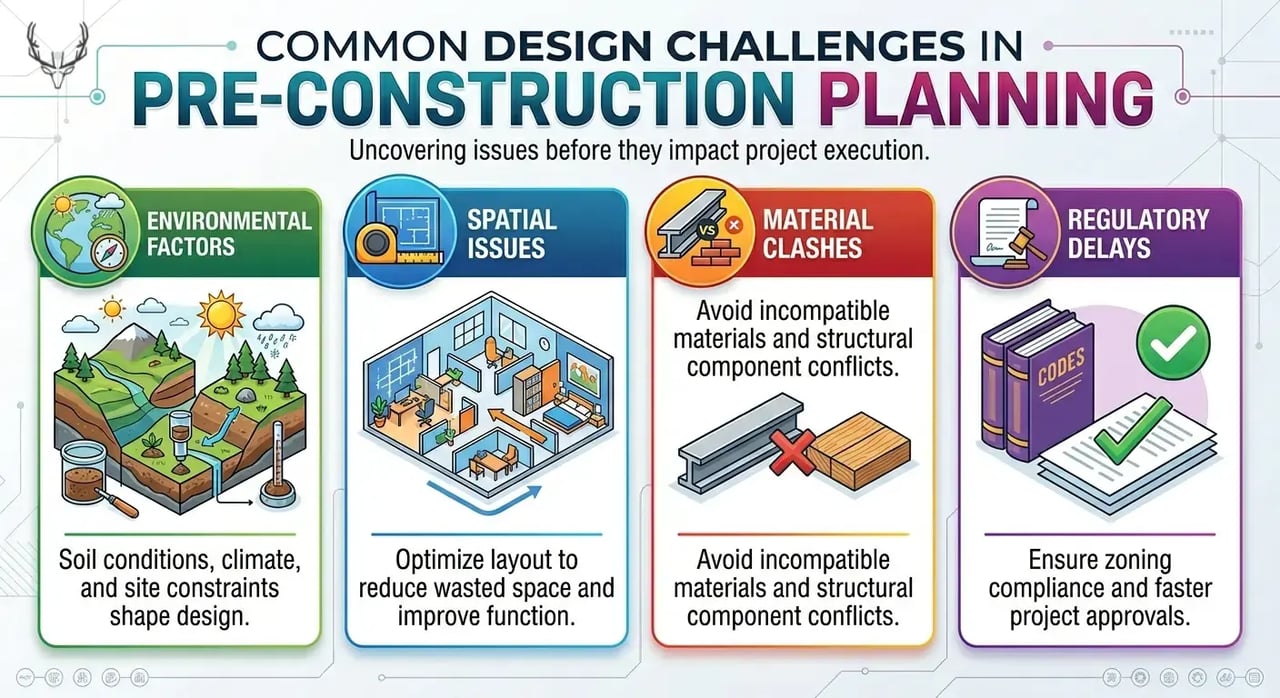
Common Design Challenges Identified During Pre-Construction Planning
Pre-Construction Planning helps uncover issues that may not be visible in initial concepts but can significantly impact execution.
Effective Pre-Construction Planning Strategies
A structured approach to Pre-Construction Planning ensures that design challenges are addressed systematically.
Collaborative Design Reviews
Regular coordination between architects, engineers, and contractors helps identify inconsistencies and refine solutions before finalization. This collaborative process improves both design quality and constructability.
Use of Digital Modeling and Visualization
Tools such as 3D modeling and Building Information Modeling (BIM) allow teams to visualize the project in detail. These technologies help detect clashes, improve spatial understanding, and support better decision-making.
Detailed Cost Planning
Accurate budgeting involves more than initial estimates. Including contingency allowances and evaluating the cost implications of design choices ensures financial stability throughout the project.
Phased Decision-Making
Breaking the planning process into stages allows for progressive refinement. Each phase builds on the previous one, reducing uncertainty and improving overall clarity.
The Role of Sustainability in Pre-Construction Planning
Sustainability considerations are increasingly integrated into early planning stages. Addressing environmental impact before construction begins leads to more efficient and responsible design outcomes.
Key considerations include:
- Passive design strategies for energy efficiency
- Selection of durable and low-impact materials
- Water management and site drainage planning
- Reduction of construction waste through efficient design
Incorporating these elements during Pre-Construction Planning improves long-term performance while aligning with evolving building standards.
How Pre-Construction Planning Improves Project Outcomes
The benefits of effective Pre-Construction Planning extend beyond cost savings.
- Improved design clarity reduces uncertainty during execution
- Better coordination minimizes delays and rework
- Enhanced efficiency supports smoother construction processes
- Long-term durability results from informed material and structural decisions
These outcomes contribute to projects that are not only cost-effective but also more resilient and functional over time.
Key Takeaways for Property Owners and Project Teams
- Pre-Construction Planning is essential for identifying design challenges early
- Early-stage coordination reduces the risk of costly revisions
- Site analysis and compliance checks improve project feasibility
- Digital tools enhance visualization and decision-making
- Sustainable strategies are most effective when integrated during planning
Wrapping Up
Pre-Construction Planning provides a structured framework for addressing design challenges before they impact cost and construction timelines. By focusing on early evaluation, coordination, and informed decision-making, projects can achieve greater efficiency and long-term value.
As construction projects become more complex, the importance of thorough planning continues to grow. Investing time and resources in this phase ensures that potential issues are resolved early, leading to smoother execution and more predictable outcomes.
Frequently Asked Questions
1. How early should pre-construction planning begin?
It should begin as soon as the project goals are defined. Starting early gives more room to evaluate design options, budget priorities, and site-related constraints before decisions become harder to change.
2. What kinds of problems can this phase help prevent?
It can reveal layout inefficiencies, material conflicts, code-related issues, and site limitations before they affect construction. Catching these details early helps avoid delays and unnecessary costs.
3. Is pre-construction planning only important for large projects?
No. Even smaller residential projects benefit from early planning because design decisions, material choices, and scheduling issues can become expensive at any scale.