


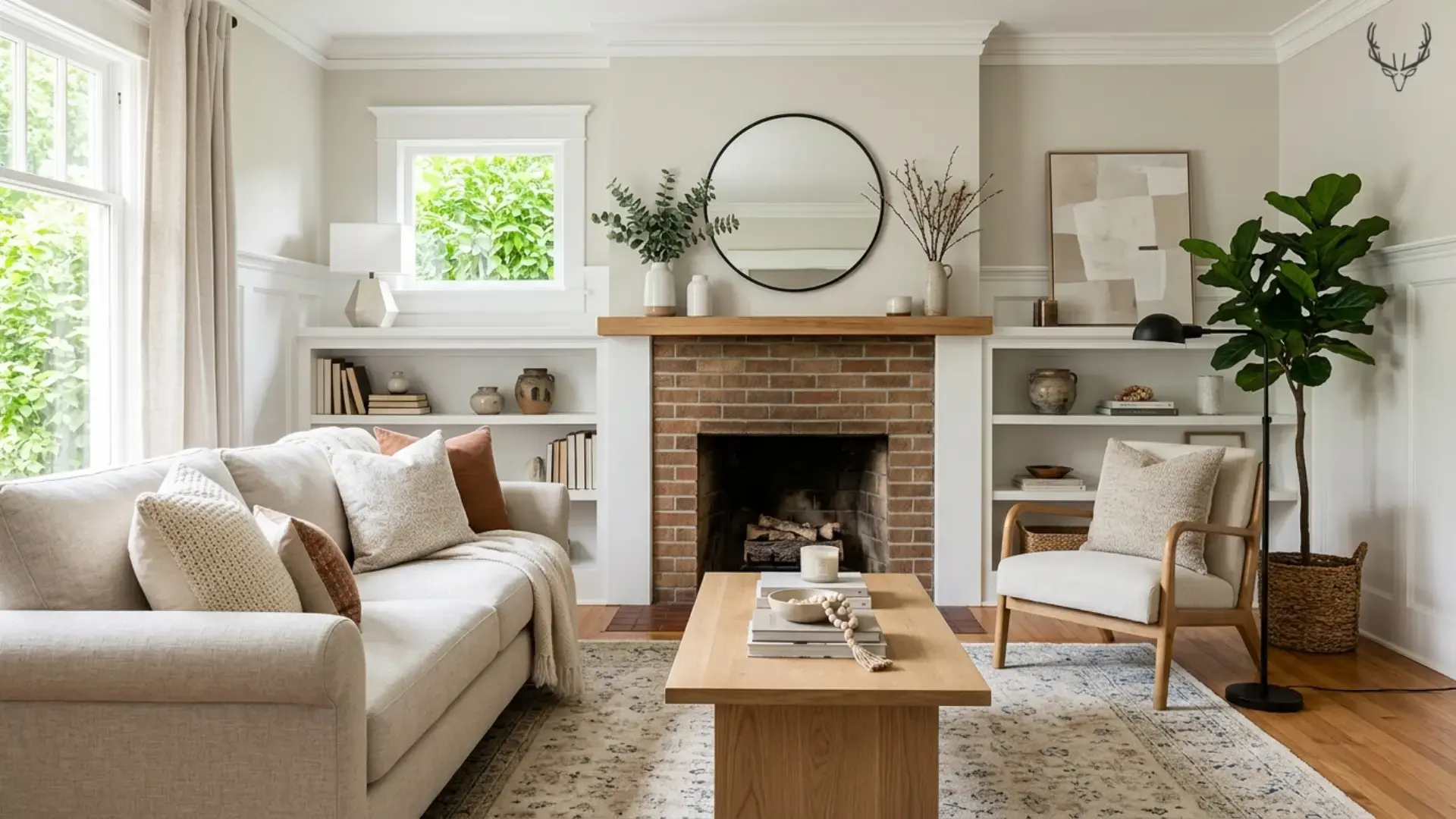
A full home remodel isn’t always practical. It demands time, budget, and disruption that most homeowners want to avoid. Yet, living in a dated space, with orange-toned wood, heavy furniture, and outdated fixtures, can feel just as frustrating.
This is where transitional design style offers a practical solution.
Instead of removing everything, this approach works with what already exists. By blending traditional elements with modern updates, you can reshape the look of your home into something intentional, balanced, and current, without structural changes.
What is transitional design in interior design?Transitional design is an interior style that combines traditional and modern elements to create a balanced, timeless look. It uses neutral color palettes, clean lines, and layered textures to modernize a space without removing existing features. |
How Transitional Design Blends Classic and Modern Styles
Transitional design sits between traditional and contemporary styles. It combines the warmth and familiarity of classic interiors with the simplicity and clarity of modern design.
Core Idea
- Traditional foundation + modern refinement
- Soft contrast instead of sharp contrast
- Timeless appearance instead of trend-based styling
Key Characteristics
- Neutral color palette: beige, taupe, grey, cream
- Balanced forms: mix of straight lines and soft curves
- Layered textures: wood, linen, metal, glass
- Minimal ornamentation: avoids heavy detailing
- Statement lighting: modern fixtures as focal points
This balance is what defines transitional interior design style and allows a space to feel updated without losing its original character.
Why Transitional Design Works for Dated Homes
Older interiors often feel outdated due to excess detail, heavy finishes, or mismatched elements. Transitional style interior design addresses this without requiring removal.
What It Solves
- Softens dated wood tones
- Reduces visual heaviness
- Introduces structure and clarity
- Keeps usable furniture relevant
Why It’s Effective
- Works with existing layouts
- Reduces renovation costs
- Allows gradual updates
- Creates a cohesive visual direction
The result is not a “new style” but a refined version of what you already have, using transitional home design principles.
Step-by-Step: How to Apply Transitional Design Without Remodeling
1. Build a Neutral Base
A neutral palette acts as the visual foundation in modern transitional interior design. It reduces contrast, calms the space, and allows mixed elements to work together.
What to Do
- Paint walls in soft whites, light greys, or taupes
- Use similar tones across upholstery, curtains, and rugs
- Balance warm wood with cooler paint tones
Why It Matters
A consistent base removes visual noise. It helps older features feel integrated rather than outdated.
2. Replace High-Impact Fixtures
Small elements define the perceived “age” of a space. Updating them shifts the overall look immediately.
Focus Areas
- Cabinet handles and door hardware
- Faucets and fittings
- Ceiling and wall lighting
Material Direction
- Matte black
- Brushed nickel
- Warm bronze
Lighting Strategy
Swap heavy or basic fixtures for:
- Drum pendants
- Linear chandeliers
- Minimal geometric lights
Lighting introduces a modern layer without altering the structure.
3. Balance Furniture Instead of Replacing It
You don’t need to remove traditional furniture. You need to balance it.
Mixing Approach
- Pair a traditional wooden table with modern chairs
- Combine a low-profile sofa with a classic accent chair
Shape Control
- Straight lines → tables, sofas
- Curves → chairs, headboards
Goal
Avoid extremes. The space should not feel overly traditional or overly minimal.
4. Use Textiles to Conceal Dated Elements
Certain outdated features can be visually minimized instead of replaced.
Practical Fixes
- Cover old flooring with large neutral rugs
- Replace heavy curtains with linen panels or Roman shades
- Hang curtains higher and wider to adjust proportions
Decluttering Rule
- Remove small decorative items
- Replace with fewer, larger pieces
This reduces visual complexity and aligns with transitional simplicity.
5. Introduce Subtle Architectural Details
If the space feels flat or generic, small structural additions can add depth.
Simple Enhancements
- Wall molding (board and batten, picture frame)
- Painted interior doors in darker tones
Effect
These elements introduce traditional character in a controlled, modern way.
6. Refresh Surfaces Without Renovation
Outdated surfaces can be improved without demolition.
Options
- Epoxy coating over old tiles
- Stick-on backsplash solutions
- Cabinet repainting
These updates shift perception without major investment.
7. Add Depth Through Texture
A neutral palette requires variation in materials to avoid flatness.
Layering Materials
- Linen and cotton fabrics
- Wool and sisal rugs
- Wood and metal accents
- Leather or suede upholstery
Purpose
Texture replaces color as the main source of visual interest.
8. Adjust Layout and Styling
Arrangement and spacing influence how modern or dated a room feels.
Layout Strategy
- Use symmetrical arrangements
- Maintain clear walking paths
- Define zones for seating or conversation
Styling Direction
- Abstract or minimal artwork
- Sculptural décor
- Indoor plants for contrast
This creates structure without overcrowding.
Room-by-Room Transitional Applications
Transitional Kitchen Design
A strong transitional kitchen design usually includes:
- Shaker-style cabinets
- Neutral countertops (quartz or marble)
- Clean pendant lighting
Transitional Living Room Design
An effective transitional living room design often features:
- Neutral sofa as anchor
- Mixed furniture styles
- Layered rugs and textiles
Transitional Bedroom Design
- Simple furniture with one statement element
- Feature wall with molding or geometry
- Balanced lighting (modern + classic)
Each room follows the same principle: balance, not replacement.
Transitional Bathroom Design
In smaller spaces, transitional bathroom design works well through:
- Clean-lined vanities
- Simple mirrors and updated hardware
- A restrained mix of warm and cool finishes
Each room follows the same principle: balance, not replacement.
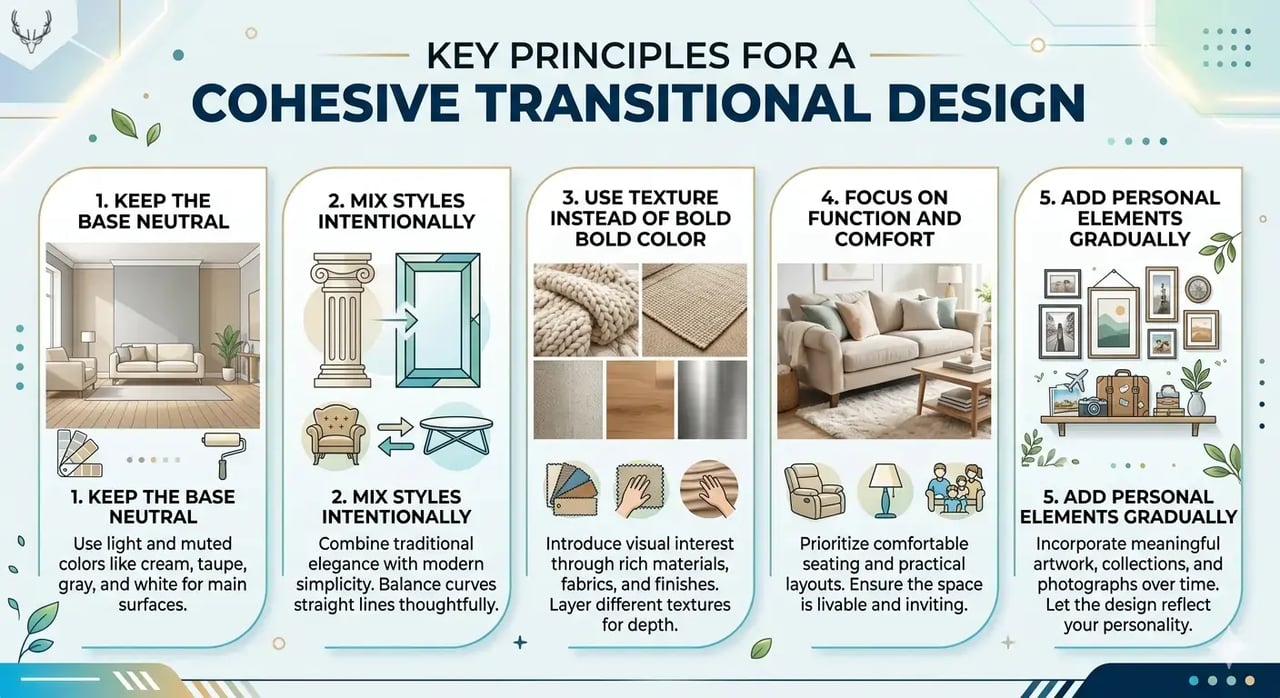
Key Principles for a Cohesive Transitional Design
Common Mistakes to Avoid
- Overcorrecting into a fully modern look
- Keeping too many ornate traditional elements
- Ignoring material variation
- Overfilling the space with décor
- Following short-term trends
Transitional design depends on restraint and balance.
A Practical Path to a Timeless Interior
Updating a dated home doesn’t require starting over. Transitional interior design offers a structured method to refine what already exists.
By adjusting color, simplifying details, balancing furniture, and layering textures, you can shift the entire perception of a space. The process is gradual, cost-conscious, and adaptable.
The result is a home that feels current without losing its foundation, clear, cohesive, and aligned with thoughtful custom home design principles that last beyond changing trends.
Frequently Asked Questions
1. Is transitional design good for small homes?
Yes. Transitional design works well in small homes because it reduces visual clutter and uses neutral tones, which make spaces feel larger and more cohesive.
2. Can I keep my old furniture in a transitional design?
Yes. Transitional design encourages mixing existing traditional furniture with modern pieces to create balance instead of replacing everything.
3. What is the difference between transitional and modern design?
Modern design focuses on minimalism and clean lines, often with high contrast. Transitional design blends modern simplicity with traditional warmth for a more flexible and timeless look.