


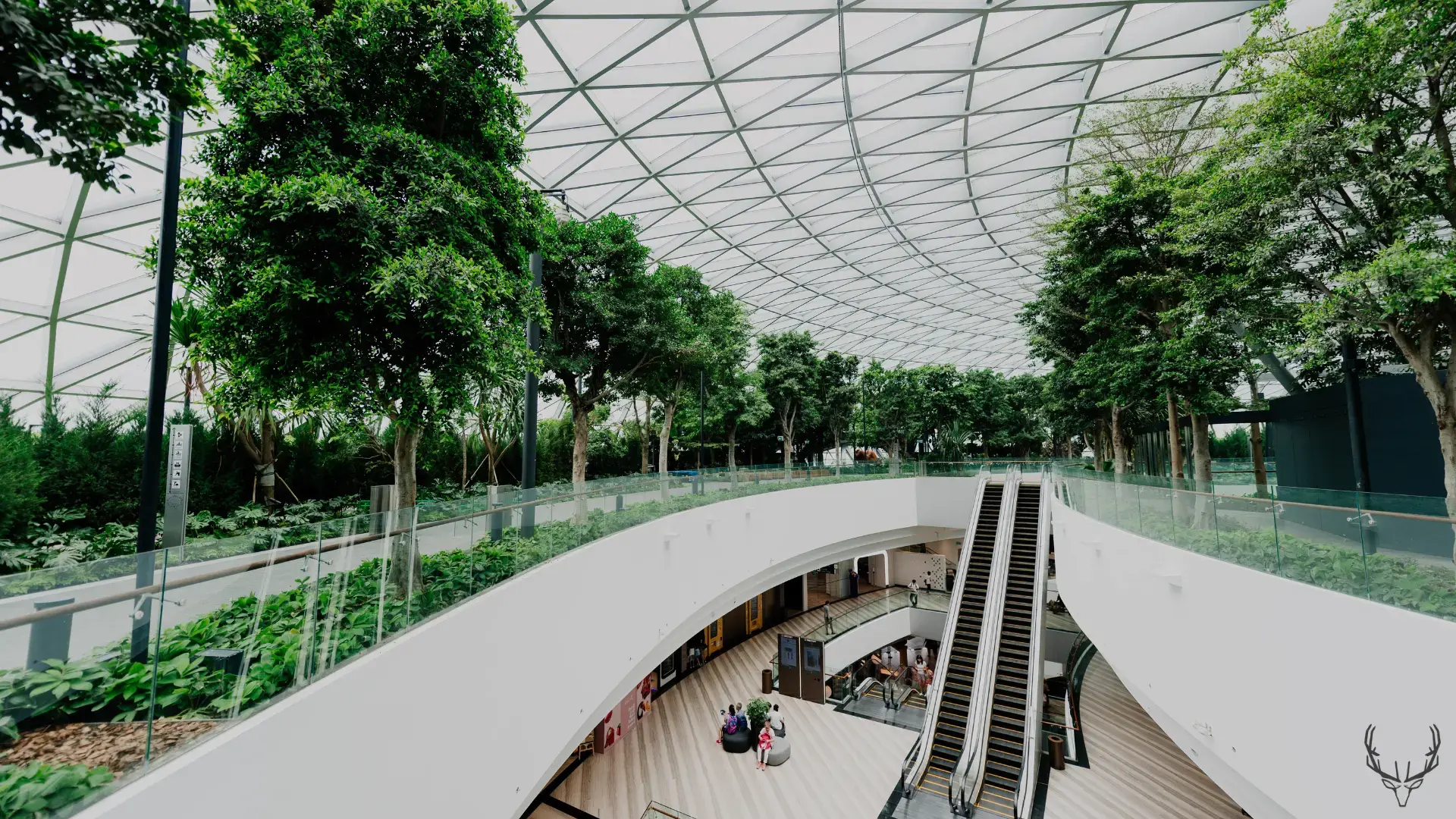
The construction industry is at a critical turning point. Globally, buildings are responsible for approximately 30% of final energy consumption and 26% of energy-related CO2 emissions. As climate challenges intensify, eco-friendly architecture has evolved from a niche trend into the gold standard for modern construction.
For Elkridge Custom Homes, designing for the future means integrating sustainable design principles that prioritize energy efficiency, environmental health, and long-term resilience. This guide explores the essential elements of green architecture and how they are shaping the homes of tomorrow.
Eco-friendly architecture, also known as green architecture, minimizes environmental impact through sustainable design and high-performance engineering.
Core Takeaways:
- Net-Zero Goals: Modern green buildings aim to produce as much energy as they consume via solar integration and airtight insulation.
- Passive Systems: Utilizing orientation and natural airflow to slash utility costs by 30–50%.
- Smart Materials: Incorporating low-carbon concrete and biomimicry to enhance building longevity.
- Value: Sustainable architecture boosts property resale value and ensures long-term climate resilience.
What is Green Architecture?
Green architecture is an approach to building that minimizes harmful effects on human health and the environment. The "green" architect attempts to safeguard air, water, and earth by choosing eco-friendly building materials and construction practices.
In contemporary practice, this involves a "holistic" view of a green building’s lifecycle. This lifecycle includes:
- Sourcing: Opting for local, renewable, or recycled materials.
- Construction: Reducing site waste and protecting local ecosystems.
- Operation: Maximizing energy efficiency and water conservation.
- End-of-Life: Designing for disassembly so materials can be reused or recycled rather than sent to a landfill.
By focusing on these phases, sustainable architecture ensures that a home remains an asset to both the owner and the planet for decades.
Core Principles of Sustainable Design
To achieve a high-ranking green building status, architects focus on several key pillars of sustainable architecture:
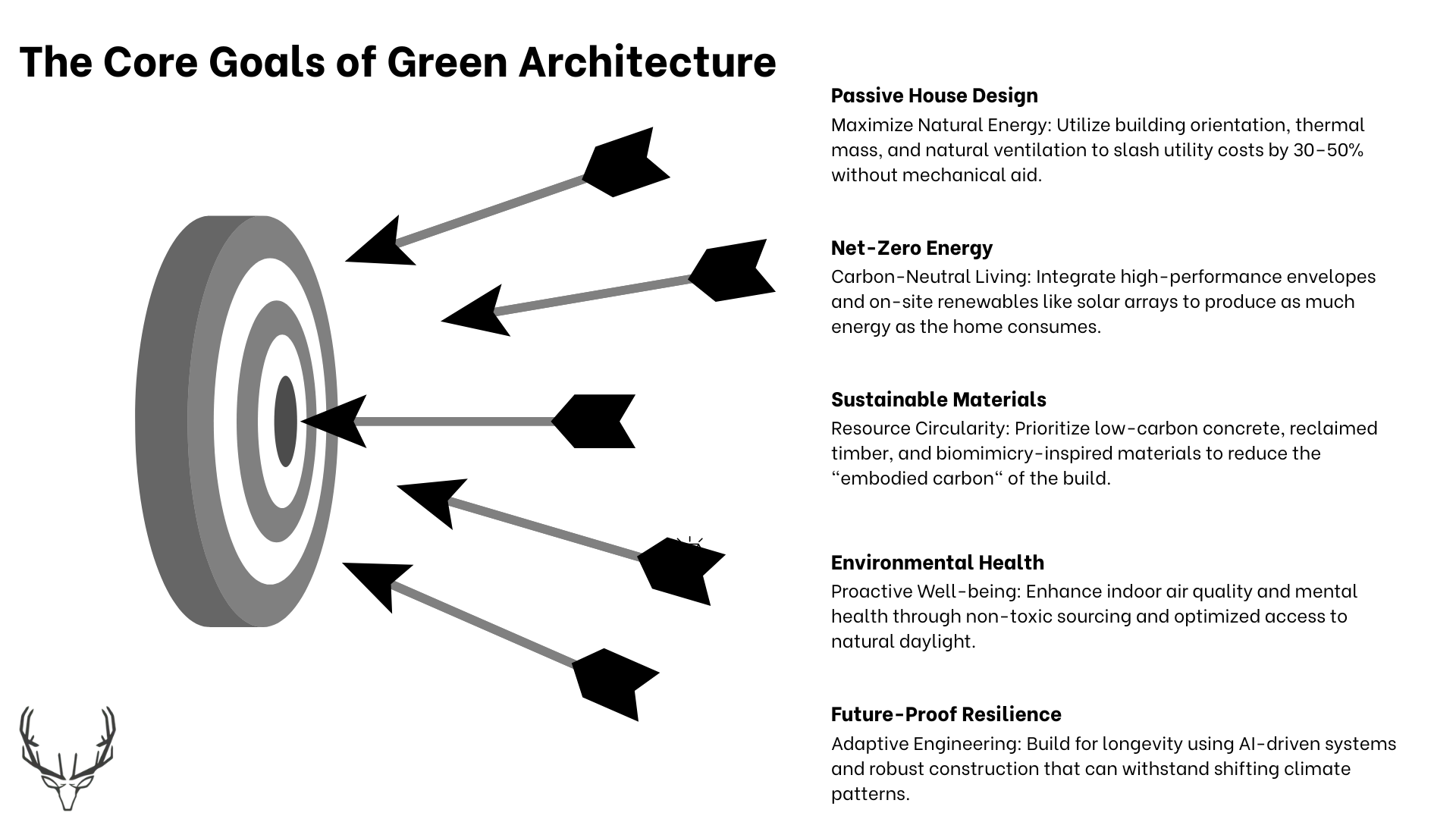
1. Passive House Design and Bioclimatic Strategies
Rather than relying solely on mechanical heating and cooling, eco-friendly architectural design utilizes the natural environment. Bioclimatic design theory emphasizes integrating climatic parameters—such as temperature and humidity—to maintain human thermal comfort.
- Orientation: Aligning the building to maximize natural light and "passive solar" heating.
- Natural Ventilation: Using traditional techniques like "wind catchers" or modern louver systems to regulate airflow without electricity.
- Thermal Mass: Using materials like concrete or stone that absorb and release heat slowly to stabilize indoor temperatures.
2. Energy Efficiency and Renewable Integration
Modern green buildings often aim for "Net-Zero" status—meaning the structure produces as much energy as it consumes annually. This is achieved through three main avenues:
- High-Performance Envelopes: The "skin" of the building is its first line of defense. By using double or triple-layer low-E (low-emissivity) glass and advanced insulation materials like cellulose or recycled denim, builders prevent energy leaks.
- On-site Generation: Green building designs frequently incorporate roof-integrated photovoltaics (solar shingles) or traditional solar arrays to power the home with clean, renewable energy.
- Smart Systems: AI-driven Building Management Systems (BMS) are the brain of the modern home. These systems use machine learning to predict occupancy patterns, automatically adjusting HVAC and lighting in real-time to eliminate waste from "over-conditioning" empty rooms.
For more information on the specific building standards we follow, visit our building process page.
3. Sustainable Materials and Circularity
The choice of materials is vital. Green building materials are often non-toxic, renewable, or recycled. Innovations include:
- Biomimicry: Designing materials inspired by nature, such as self-healing concrete or insulation modeled after polar bear fur.
- Low-Carbon Concrete: Alternatives that sequester carbon rather than emitting it during production.
- Reclaimed Wood and Bamboo: Rapidly renewable resources that reduce the demand for old-growth timber.
The Benefits of Sustainable Design
While the environmental impact is the primary driver, the personal benefits of living in an eco-friendly architectural design are substantial.
|
Benefit Category |
Impact of Green Buildings |
|
Financial |
Significant reduction in monthly utility bills and long-term maintenance costs. |
|
Health |
Improved indoor air quality and increased access to natural light, which boosts mood and productivity. |
|
Market Value |
Sustainable homes often command higher resale values as buyers look for future-proofed properties. |
|
Resilience |
Better equipped to handle extreme weather events through robust insulation and independent power sources. |
If you're ready to start your journey toward a healthier, more efficient home, contact us today for a consultation.
The Future of Green Building: AI and Biomimicry
As we look toward 2030 and beyond, sustainable architecture is becoming increasingly high-tech and "nature-inspired."
- Biomimicry: Architects are studying nature to solve human problems—for example, designing ventilation systems modeled after termite mounds or creating self-healing concrete inspired by human skin.
- AI-Optimized Design: Before a single brick is laid, AI can run thousands of simulations to determine the exact shape and orientation of a building that will yield the lowest carbon footprint.
- Water Neutrality: The next generation of green buildings will aim to be water-neutral, recycling every drop through advanced on-site filtration and rainwater harvesting.
Why Choose Elkridge Custom Homes for Your Sustainable Project?
At Elkridge Custom Homes, we believe that luxury and sustainability are not mutually exclusive. We specialize in translating complex green architecture principles into beautiful, livable spaces. Our approach focuses on:
- Site-Specific Analysis: We study the topography and climate of your specific lot to maximize passive energy gains.
- Expert Sourcing: We have deep relationships with suppliers of high-performance, sustainable materials that aren't found in standard builds.
- Future-Proof Engineering: We integrate the latest smart home technologies to ensure your home remains efficient for decades to come.
Frequently Asked Questions (FAQ)
What is eco-friendly architecture?
Eco-friendly architecture, or sustainable design, is a holistic approach to building that minimizes environmental impact throughout a structure's lifecycle—from design and construction to operation and demolition.
It prioritizes energy efficiency, renewable materials, water conservation, and harmony with the surrounding landscape to reduce carbon emissions and create healthier living spaces.
What is eco architecture called?
Eco architecture is most commonly called sustainable architecture or green building. It focuses on minimizing the environmental impact of construction by enhancing efficiency, using renewable resources, and reducing energy consumption. It is also known as environmental architecture, eco-design, or ecological design.
What are the 7 different types of architecture?
- Residential architecture.
- Commercial architecture.
- Landscape architecture.
- Interior design architecture.
- Urban design architecture.
- Green design architecture.
- Industrial architecture.
What is a "Net-Zero" building?
A net-zero building is a highly energy-efficient structure that produces as much renewable energy on-site as it consumes annually, resulting in a net-zero energy balance.
They often incorporate advanced insulation, solar panels, and smart technologies to achieve this, lowering operating costs and improving energy security.
Why is sustainable design important for homeowners?
Sustainable design lowers utility costs, increases property value, and improves indoor air quality. It ensures a home is resilient against climate change while providing a healthier environment for families.
Final Thoughts
Eco-friendly architecture is the only way forward. As we design buildings for the future, we must prioritize the health of our planet as much as the comfort of our homes. By choosing sustainable architecture, you are making a choice for efficiency, health, and a lasting legacy.
Whether you are building a mountainside retreat or a modern estate, the integration of green architecture ensures your home is efficient, healthy, and prepared for the challenges of the next century. Ready to build your future? Explore how Elkridge Custom Homes can bring your vision to life.