


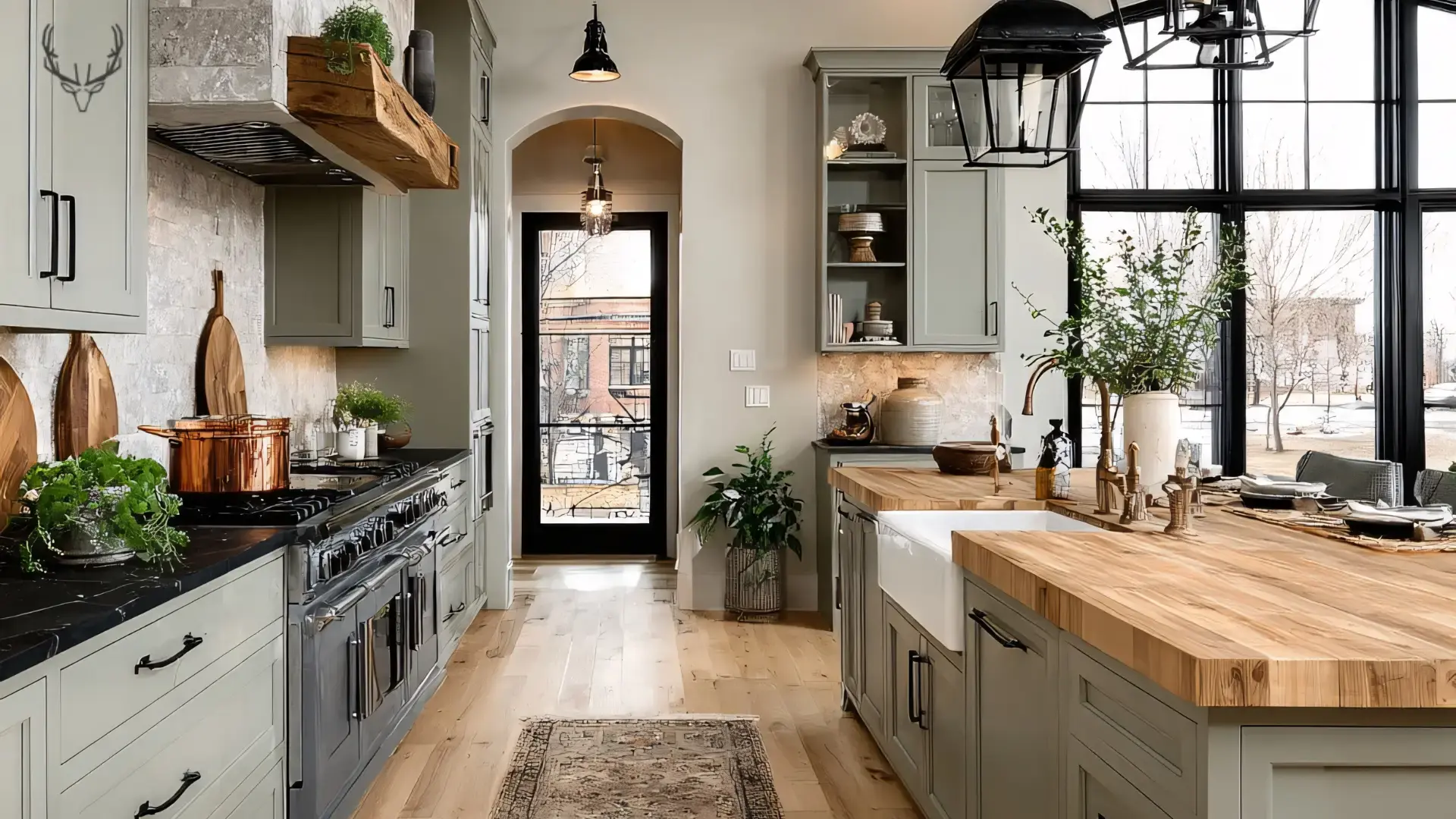
European farmhouse interiors often look effortless, but getting that look right isn’t as simple as adding rustic décor or copying what you see online. Without the right approach, spaces can start to feel forced, busy, or trend-driven.
This guide breaks down how the style actually works. You’ll see what gives European farmhouse interiors their warmth and balance, how to apply those ideas in real rooms, and how to avoid the common mistakes that make the look fall flat. The focus stays on materials, layout, and practical choices that hold up over time.
If you want a clearer, more grounded way to approach this style, the sections ahead will walk you through it.
What European Farmhouse Decor Really Means
European farmhouse decor isn’t about buying a bunch of “farmhouse” stuff and putting it everywhere. It’s more about the feel of the home, and that comes from the materials, the finishes, and how everything works together.
Most European farmhouse homes have a few things in common:
- Lots of natural materials like wood, stone, linen, and plaster
- Warm, calm colors (nothing too bright or loud)
- A mix of old and new pieces that look collected over time
- Less “decor for the sake of decor,” and more intentional choices
Instead of trying to decorate every surface, this style lets the home breathe. You’ll see simple walls with soft texture, real wood that shows grain, and details that feel solid and well-made.
And this is where a custom-home mindset helps. When the layout finishes, and materials are planned from the start (not added later), the whole home feels more natural, more balanced, and easier to live in.
European Farmhouse Style vs. Modern Farmhouse
People often use these two styles interchangeably, but the European farmhouse style and the modern farmhouse are actually quite different once you look closer.
Modern farmhouse, especially in the U.S., tends to focus on contrast and décor. Think black-and-white color schemes, industrial light fixtures, bold accents, and lots of decorative details meant to “look farmhouse.”
European farmhouse style is quieter. It leans more on:
- Warm, soft colors instead of high contrast
- Natural materials like stone, wood, and plaster
- Fewer decorative pieces, but better quality ones
- Spaces that feel comfortable and lived in, not styled
Quick comparison
People mix these up all the time, but European farmhouse style and modern farmhouse give off very different vibes once you see the details.
|
Feature |
European farmhouse style |
Modern farmhouse (common U.S. version) |
|
Overall feel |
Warm, calm, “lived-in” |
Bold, high-contrast, more “styled” |
|
Color palette |
Soft whites, creams, warm neutrals, muted tones |
Lots of white + black, stronger contrast |
|
Materials |
Stone, plaster, aged wood, linen |
Painted finishes, metal accents, mixed “rustic” decor |
|
Furniture |
Collected a mix of old + new |
More matching sets or “store-coordinated” looks |
|
Decor approach |
Fewer items, more character |
More accessories (signs, themed pieces, lots of styling) |
|
Look over time |
Ages well, doesn’t feel trendy |
Can start to feel dated if it leans too trend-heavy |
Instead of trying to make a statement, European farmhouse homes feel settled and relaxed. The design supports everyday life rather than competing for attention.
This difference becomes especially clear in well-designed homes where the layout, finishes, and flow are thought through early on. When the bones of the home are right, you don’t need heavy décor to make it feel finished.
European Cottage Interiors: Cozy Without Clutter
If you’ve ever walked into a room and instantly felt relaxed, like nothing is trying too hard, that’s the vibe European cottage interiors are good at.
These spaces don’t feel “decorated.” They feel lived in. And the trick is that they usually have fewer things, not more.
Here’s what to copy from that look:
1. Start with the room’s scale.
European cottage rooms usually feel human-sized. So instead of oversized furniture, go for pieces that fit the space and leave walking room. A smaller sofa with a deep seat beats a massive sectional most of the time.
2. Use texture to create warmth.
This style doesn’t rely on bright colors. It uses layers: linen curtains, a wool throw, a vintage rug, and a wood table with real grain. Texture does the heavy lifting.
3. Let one “old” piece do the talking.
You don’t need a full house of antiques. One piece with age: an old cabinet, a worn bench, a vintage mirror, adds character fast. Everything else can be simpler.
4. Keep surfaces calm.
If every shelf and table has something on it, the room starts feeling busy. European cottage interiors usually leave space on purpose. That empty space is part of the design.
If your goal is cozy without clutter, this is the easiest direction to take, because it’s more about editing than shopping.
Farmhouse Chic Home Decor: Elevated, Not Overdone
Farmhouse chic home decor is basically farmhouse style with better editing. It still feels warm and comfortable, but it looks more polished, without feeling fancy or formal.
Do / Don’t
|
Do |
Don’t |
|
Pick fewer pieces, but make them count |
Fill every shelf, wall, and corner just to “finish” the room |
|
Mix clean shapes with warm textures (linen, wood, stone) |
Go heavy on rough, overly distressed finishes everywhere |
|
Let real materials create character |
Use themed décor (signs, novelty “farmhouse” accents) to force the vibe |
|
Invest in lighting that feels intentional |
Treat lighting like an afterthought or rely only on basic fixtures |
|
Aim for calm and timeless |
Chase trends that look dated quickly |
How This Looks in Real Rooms
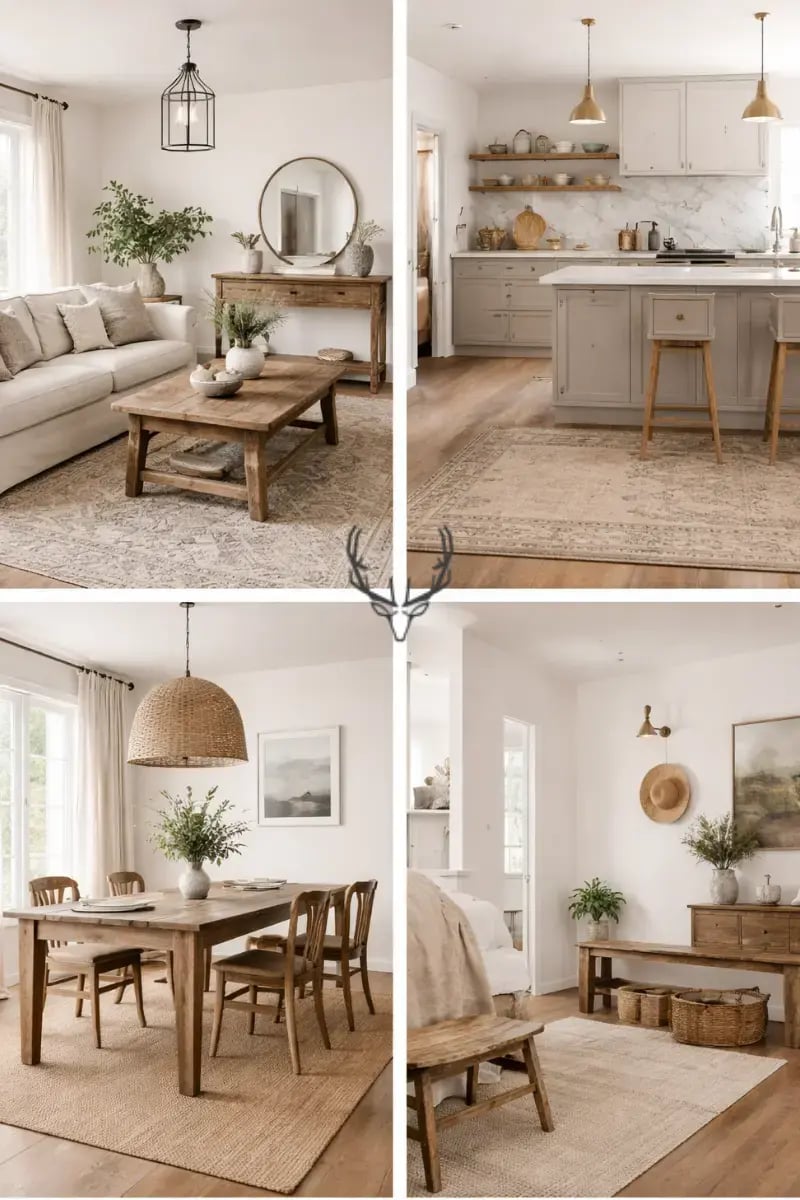
Living Room
A farmhouse chic living room usually looks simple at first glance: a comfortable sofa, a wood coffee table, a vintage-style rug, and one great light fixture. Instead of lots of décor, the room feels elevated because the materials are strong and the layout feels easy to live in.
Kitchen
A European farmhouse kitchen focuses more on function than flash. Cabinetry is usually painted wood in soft, warm tones. Countertops are often stone or wood, chosen because they age well. Open shelving is used sparingly and holds everyday items, not decorations. Hardware and lighting stay simple, often in aged or unlacquered finishes. The overall feel is calm, practical, and built for daily use.
Dining Area
Picture a solid wood dining table, chairs that don’t perfectly match (but work together), and a warm pendant light above. The “chic” part comes from keeping it clean and balanced, not from adding more stuff.
Bedroom or Entryway
In a bedroom, farmhouse chic is calm bedding, soft texture, and one statement piece (like a vintage mirror or an upholstered headboard). In an entryway, it’s a bench, a simple light, and maybe one piece of art; functional, not cluttered.
Quick Decorating Ideas for Farmhouse Homes
If you’re looking for decorating ideas for farmhouse spaces that actually work (and don’t feel overdone), these quick tips will help you get there without redoing your entire home.
1. Start by removing, not adding
Before buying anything new, take a look at what you already have. Clearing off extra décor often makes a bigger difference than adding more pieces.
2. Stick to a tight color range
European farmhouse–inspired homes usually stay within a small palette. Warm whites, soft beiges, muted grays, and natural wood tones go a long way.
3. Use texture to add interest
If everything is smooth and flat, the room feels cold. Add texture with linen curtains, wool throws, woven rugs, or aged wood furniture.
4. Let one piece stand out
Every room only needs one “character” piece: a vintage cabinet, a worn bench, a stone fireplace surround. Too many statement pieces compete with each other.
5. Choose real materials whenever possible
Real wood, stone, and metal always look better over time than faux versions. Even using one or two authentic materials can elevate the whole space.
6. Keep shelves practical
Open shelving should hold things you actually use: dishes, bowls, books, not just decorative objects. It feels more natural and less styled.
7. Pay attention to lighting
Warm lighting instantly makes a space feel more inviting. Skip overly bright or cool bulbs and choose fixtures that feel simple and timeless.
These decorating ideas work especially well in homes that are designed with good flow and proportion from the beginning. When the layout and finishes are right, décor becomes the finishing touch, not the solution.
Common Mistakes to Avoid
When people try to recreate a European farmhouse look, most of the problems come from trying too hard. This style works best when it feels natural and effortless.
Here are some common mistakes to watch out for:
- Overdecorating the space: If every wall, shelf, and surface is filled, the room starts to feel busy. European farmhouse decor relies on calm spaces and breathing room.
- Relying on “farmhouse” labels: Buying items just because they’re marketed as farmhouse often leads to a forced look. Focus on materials and quality instead of trends or themes.
- Too much distressing: A little age adds character. Too much makes the space feel fake. Not everything needs to look old or worn.
- Ignoring scale and proportion: Oversized furniture in smaller rooms throws everything off. European-inspired spaces usually feel more balanced because furniture fits the room.
- Using décor to fix layout issues: Decor can’t fix poor flow or awkward layouts. Homes that feel right from the start, where rooms, light, and movement are well thought out, naturally support this style without needing extra layers.
Avoiding these mistakes makes the biggest difference, especially in homes where long-term livability matters more than short-term trends.
European Farmhouse Decor: Final Thoughts
European farmhouse decor comes down to a few things: natural materials, simple shapes, and rooms that feel warm, functional, and uncluttered.
In this guide, we covered what defines European farmhouse style, how it differs from modern farmhouse, how European cottage interiors stay cozy without feeling busy, and how farmhouse chic home decor keeps things elevated without overdoing it.
We also shared decorating ideas for farmhouse spaces, showed how the look translates room by room, including a European farmhouse kitchen, and called out the most common mistakes to avoid.
If you’re planning a new build or a major update, the best results come when the layout, materials, and finishes are planned upfront, not patched together later.
FAQs About Modern European Farmhouse Interiors
What style is replacing modern farmhouse?
Modern farmhouse is gradually being replaced by warmer, more relaxed styles like transitional cottage and European-inspired interiors. These styles focus less on contrast and more on natural materials, texture, softer colors, and a lived-in feel.
Is modern farmhouse still in style in 2026?
Modern farmhouse isn’t disappearing, but it’s evolving. Cleaner, less decorative versions with warmer materials and fewer contrasts are staying relevant, while overly themed or high-contrast farmhouse designs are starting to feel dated.
What makes a home look outdated?
A home can look outdated due to worn appliances, old finishes, or colors that were popular decades ago. Overly trend-driven design choices, poor lighting, and heavy décor can also make a space feel stuck in the past.